The Commodore Turned 60 With No Guests. What Would Landmark Status Change on the Seawall?
November 12, 2026
November 12, 2026
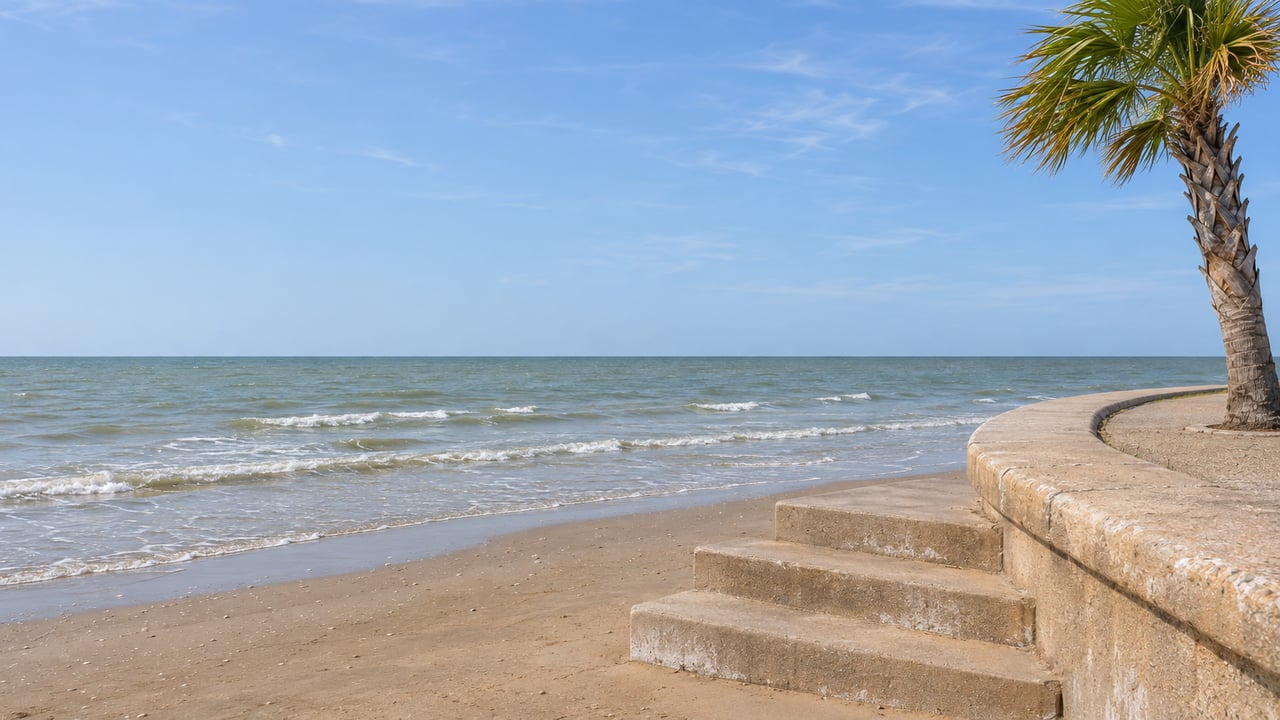
Drive along Seawall Boulevard near 36th Street and you can pick out the Commodore on the Beach by its shape. Galveston architect Louis Lloyd Oliver designed it as a tight S-curve. City documents call the guest-room layout a "whiplash floor plan," with rooms looking over a kidney-shaped pool and an asymmetrical courtyard, all running parallel to the seawall and the Gulf.
The motel opened in October 1966, so it turned 60 last month with no guests. It closed in early 2023, according to Chron. The building is now in the middle of a request to become an official Galveston Landmark. As of late October, the owner had not applied for construction permits, so the landmark application is the paperwork actually moving through City Hall. If the city approves it, the rules protecting that S-curve and the tax break for keeping it could be in place before any work starts.
The Commodore has changed hands several times in the past decade. The ownership chain below comes from The Daily News and Chron:
| When | What happened at 3618 Seawall Blvd. |
|---|---|
| October 1966 | Motel opens. Original owner is Druss Real Estate, the family business of the extended Druss family |
| 2017 | Houston-based BT&R buys the property from Gary Druss and family |
| Later | Galveston Restaurant Group buys the hotel and The Gumbo Diner next door from BT&R |
| May 2021 | JMK5 Holdings acquires the Commodore |
| Early 2023 | Hotel closes to guests |
| May 2025 | Good Bull Capital of The Woodlands announces an equity purchase |
| May 2026 | Good Bull takes outright ownership after a foreclosure auction |
| October 2026 | Landmark designation request becomes public |
Under JMK5, the plan was a major makeover and rebrand. Renovations were supposed to happen in phases while the hotel stayed open, including a redo of the pool. The work dragged on, the hotel closed, and then everything stopped. When Good Bull announced its purchase in May 2025, its representatives said crews would be back within 30 days, and The Daily News reported that the months that followed showed no signs of work.
That history is why the Commodore's next step gets so much attention. The building has had restoration plans before. This time, the first move is a request to the city.
Because work under the prior owner was suspended, Good Bull has to apply for new permits before any construction can begin. Catherine Gorman, assistant director of Development Services for the city, told The Daily News in May that the company's representatives "seemed motivated to move forward." By late October, The Daily News reported that no permit applications had been submitted. City spokesperson Marissa Barnett told Chron that Good Bull's representatives had held "several" pre-development meetings with the city, where staff explain the permitting process and go over which permits a project may need.
The landmark request is on file. Cara Quigley of Ryan Historic Advisors submitted it as application 26P-054, and the property owner of record is Good Bull Commodore, LLC. The Daily News called it "highly likely" that the company is waiting on approvals before starting major renovations. Either way, the landmark decision will shape the rules for whatever renovation follows.
Designation comes with an incentive and a set of rules, and both stay with the building.
According to The Daily News and Chron, designation would mean:
Keeping the curved building earns a lower city tax bill for five years. Changing the outside, adding to it or tearing it down means going through design review. Since the exemption carries over in a sale, a future buyer gets the same deal and the same oversight. For anyone on the island who has watched the property during the stalled years, designation would tie the building's appearance to rules that last longer than any one owner's plans.
Chron also notes that the regulations behind the exemption, Section 10 of Galveston's land development regulations, are in the early stages of an overhaul.
City officials told The Daily News the Commodore would be the first mid-century motor court that Galveston designates as a city landmark. The city calls it one of the few remaining examples of the type.
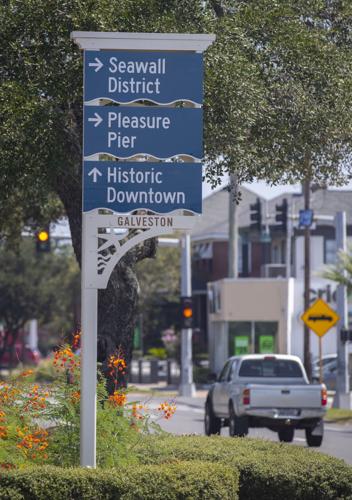
Chron describes the Commodore as a building that once shared Seawall Boulevard with the Flagship Hotel and the Seahorse Inn. The Seawall has been changing fast lately. This fall it's had cranes rising over new construction and new wayfinding signs meant to keep visitor traffic on the main roads. A 1966 motor court with protected status would anchor its block to an older era of beach travel while newer buildings go up around it.
Good Bull's plans have stayed the same since May. In its announcement, as reported by The Daily News, the company described a tapas-style restaurant, several bar concepts and a "renewed hospitality experience designed to honor the building's historic character while bringing new energy to the seawall." When it acquired the property, it called the move "a major step forward in the long-anticipated revitalization of one of Galveston's most recognizable coastal properties," according to Chron.
The 92-room count and the restaurant-and-bar plan are the only details the company has made public. Its stated goal of honoring the building's historic character matches what landmark design review would require on the exterior, which helps explain why the owner is the one asking for designation.
The request goes through two public steps:
The public hearing notice lists the property's full legal description: 3618 Seawall Boulevard, part of the M.B. Menard Survey, including Lot 14 of Southwest Block 161 in the Galveston Outlots. That description and application number 26P-054 identify the request on the notice.
Council's Dec. 10 consideration is the next public step for deciding whether the Commodore's S-curve comes under design review. Building permits are a separate process, and they are still the next step before any renovation can begin.
If you're curious how a landmark vote or a project like the Commodore could affect the blocks around it, from Seawall frontage to the neighborhoods just behind it, Shani Atkinson follows these island stories closely and is glad to talk them through with you. Discover island living and contact Shani when you're ready to start your search.
Stay up to date on the latest real estate trends.
With deep island knowledge and a client-first mindset, Shani helps you navigate the Galveston market with confidence—delivering clarity, communication, and exceptional outcomes.