Why Cranes Are Rising on Galveston's Seawall While Home Prices Keep Falling
September 24, 2026
September 24, 2026
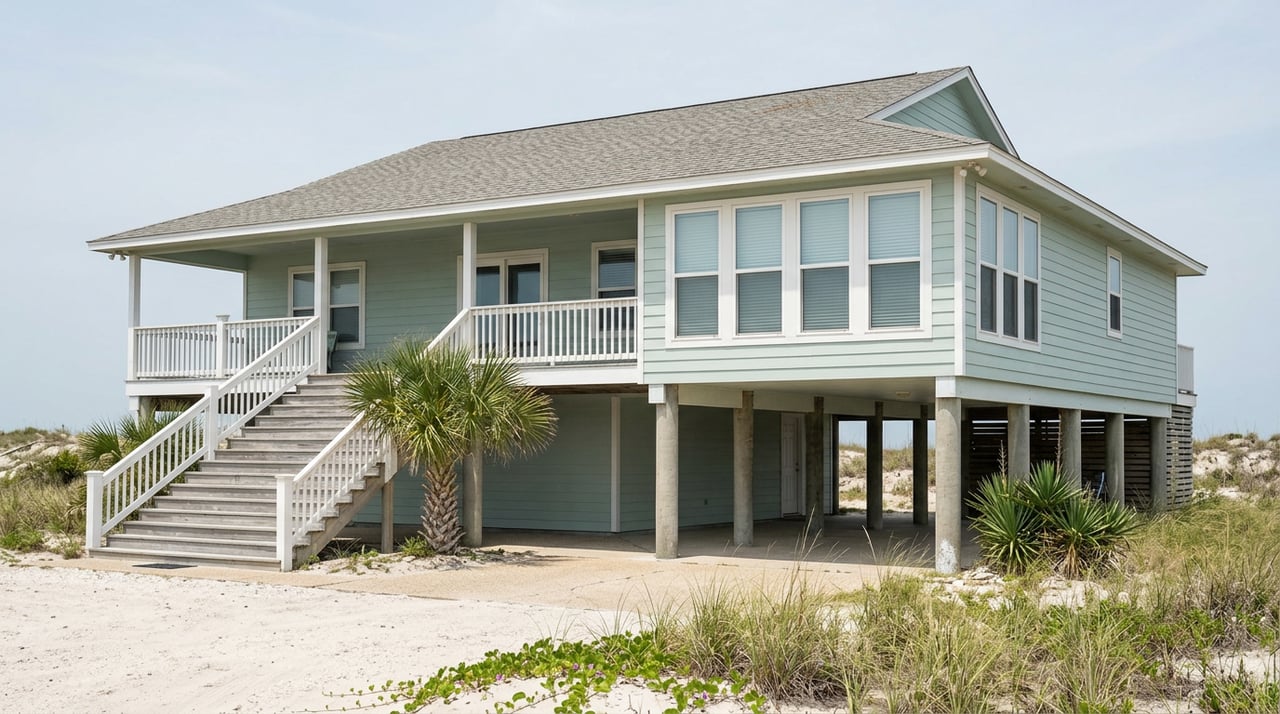
Drive west on Seawall Boulevard past Stewart Beach and you will pass at least a dozen homes with price-reduced signs, some that have sat long enough for the yard signs to fade in the salt air. Keep going toward the point where Seawall becomes Termini-San Luis Pass Road and the story flips. A ten-story glass tower is rising against the sky, cranes still swinging, workers wrapping up the interior of a building that topped out six weeks ahead of schedule this past March. A few hundred yards further, survey stakes mark where a $540 million hotel and condo complex is set to break ground.
Both scenes are true at the same time, and that is the part worth understanding before you make an offer on anything on this island. Galveston does not have one housing market right now. It has two, and they are answering to completely different forces.
If you have been watching listings, the numbers you have seen are not exaggerated. As of August 2026, the median sale price for a home in Galveston sat at $374,752, down 6.3 percent from a year earlier. Homes were spending a median of 110 days on the market that same month, flat compared to August 2025 but still long by most standards. Earlier in the year, the city was carrying roughly 11 months of housing supply, well above the 5 to 6 months that typically signals a balanced market.
Even zip code 77550, which covers the historic East End and downtown, showed the same softness on a smaller scale. Over the three months ending in August 2026, the median sale price there was $334,000, down 1.9 percent year over year, though homes were moving a bit faster than the year before at 83 days on market instead of 87.
The driver behind most of this is not mysterious. Between 2021 and 2024, the number of registered short-term rentals on the island roughly doubled, approaching 5,000 units. Buyers who purchased beach houses expecting Airbnb income are now competing with thousands of similar listings for the same guests, and by the end of 2025 active inventory on the island had roughly doubled year over year as some of those owners decided to sell rather than keep absorbing insurance and maintenance costs against thinning rental income. That is the glut you are reading about. It is real, and it is concentrated in existing homes bought as rental plays.
None of that softness shows up in the newest projects going up along the Seawall. Four are worth knowing by name if you are shopping this market.
Four different developers, four different products, and not one of them appears to be waiting for the resale market to recover before moving forward.
The explanation came directly from one of the developers building through it. Bathija has said publicly that Galveston's supply glut is not a meaningful drag on Tiara on the Beach, because the people buying there are not looking for a rental investment. They want a place they can lock up and leave, not a listing to manage on a booking calendar. That is a fundamentally different buyer than the one who bought a West End cottage in 2022 expecting Airbnb income, and it means the two products are not really competing for the same dollar.
There is a longer-run bet underneath that distinction too. Developers building on the island point to Census estimates showing Galveston's population has grown nearly 7 percent since 2010, to roughly 53,350 residents, alongside a cruise industry that has grown to record passenger volumes through the Port of Galveston in recent years. Their argument is that the island is not just a vacation rental play anymore. It is a place more people want to live and visit year-round, and new construction is priced for that longer view rather than for this month's resale comps.
We have written before about the tradeoffs between historic charm and new construction on the island, and this is the same choice showing up at a larger scale. An existing home carries the price history of the last owner's decisions, including whether that owner bought during the rental boom. A new tower carries none of that baggage, and its pricing reflects the developer's read on where the island is headed, not where the resale market sits today.
If your plan is to buy an existing home on the island, the current conditions genuinely favor you. Sellers with price-reduced signs are, in many cases, motivated owners working through the same rental-income math that created the glut in the first place. That gives you room to negotiate on price, on repairs, and on timeline in a way that was not available two or three years ago.
If your plan involves new construction on the West End Seawall corridor specifically, treat that as a separate conversation. Units at Tiara on the Beach are selling months ahead of completion. Sachs on the Seawall has not broken ground yet and will not deliver units for years, but its pricing and pre-leasing strategy will almost certainly track the buyer profile Satya has already found, not the East End's resale numbers. Waiting for the broader island market to soften further will not necessarily get you a better price on a unit in a building that is not built for the rental-exit crowd to begin with.
The practical takeaway is to know which market you are actually shopping before you anchor your expectations to a headline. A soft median price citywide tells you something true about existing homes bought during the short-term rental boom. It tells you very little about what a brand-new tower two blocks away is going to cost, because that tower was never priced against the glut in the first place.
Does the resale glut mean prices on the West End will keep falling for years? The data through August 2026 shows continued softness, but the softness is concentrated in the segment tied to short-term rental economics. Nothing in the current reporting suggests new construction pricing is following the same trajectory, since those projects are aimed at a buyer who was never part of the rental math to begin with.
Should I hold off on an existing home hoping prices drop further? That depends entirely on what you are buying and why. If you are looking for a rental income property, the STR oversupply is a real factor to price into your offer. If you are looking for a primary residence or a second home you plan to use yourself, the current inventory and negotiating room may be the better opportunity to act on now rather than waiting on a market that is correcting for a problem that does not apply to your purchase.
Galveston's Seawall is telling two stories right now, and both of them are accurate. The trick is figuring out which one applies to the property you actually want. If you are trying to sort through what the current market means for your specific search, whether that is an existing home with room to negotiate or a look at what is coming out of the ground on the West End, Shani Atkinson can walk you through both sides of it and help you find the property that actually fits your plan. You can also browse current listings and market notes on our Galveston neighborhood page to see what is available right now.
Stay up to date on the latest real estate trends.
With deep island knowledge and a client-first mindset, Shani helps you navigate the Galveston market with confidence—delivering clarity, communication, and exceptional outcomes.