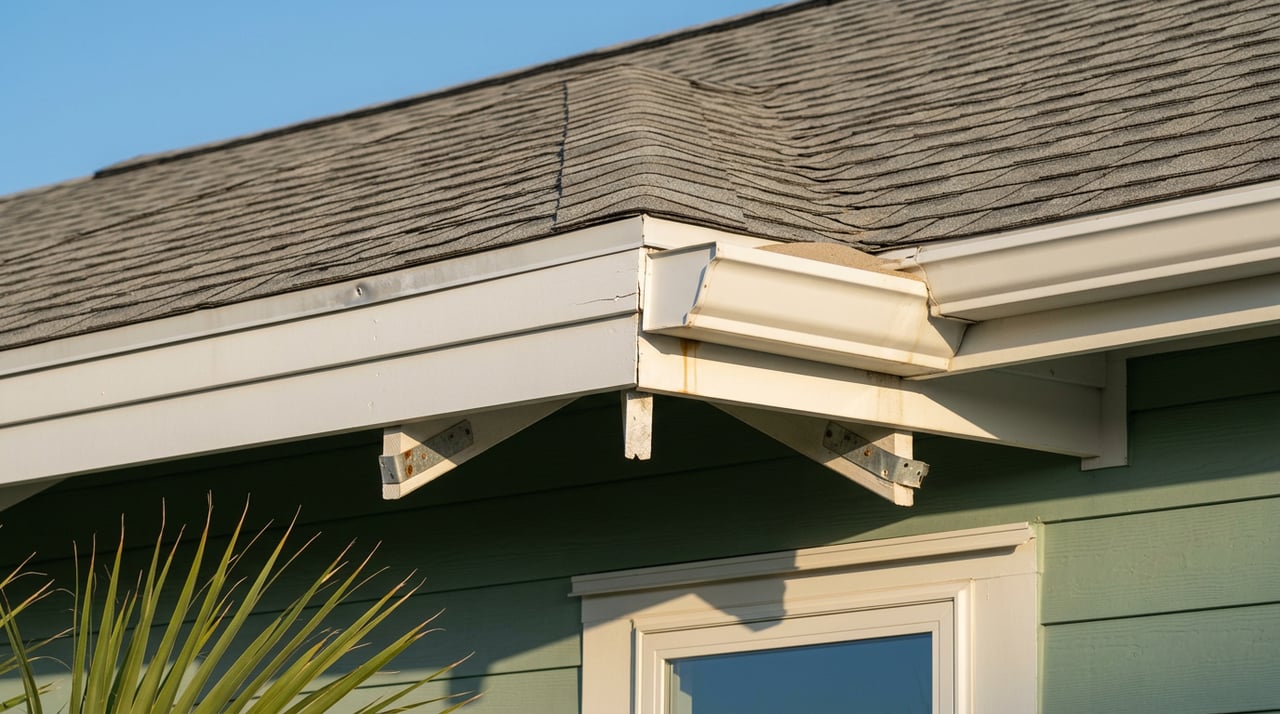
Galveston Windstorm Insurance Rates and Buyer Costs
August 20, 2026
August 20, 2026
The closing table for a Galveston home rarely has one insurance binder on it. It has three. A buyer moving from Houston, where a single homeowners policy covers fire, theft, and wind in one document, sits down on the island and finds a stack: an ex-wind homeowners policy for fire and liability, a separate windstorm policy through the Texas Windstorm Insurance Association, and a flood policy through the National Flood Insurance Program or a private carrier. None of the three covers what the other two do. Miss one, or let the renewal dates drift out of sync, and a storm can expose the exact gap nobody caught during underwriting.
That friction has been part of buying on the coast for years. What changed on August 4, 2026, is the assumption sitting underneath it: that the windstorm layer of that stack only gets more expensive every year you own the house.
According to the Galveston County Daily News, TWIA's board met at the Tremont House in Galveston and voted unanimously to hold windstorm rates flat for 2027 policies, the second consecutive year without an increase. The same report also noted that Chief Actuary Jim Murphy told the board that recent legislation "had a dramatic impact and improvement on the rate adequacy of the association." The 2026 Rate Adequacy Analysis found residential rates running 9 percent above what's needed to cover expected costs, with commercial rates 4 percent above adequate. In plain terms, TWIA is now collecting more in premiums than its own actuaries say it needs.
For Galveston County specifically, the numbers behind that vote are worth sitting with. The county carries 86,697 TWIA policies, more than any other county in Texas, insuring $42.3 billion in property and generating $54.4 million in annual premiums. When an association that size finds a nine-point surplus instead of a shortfall, that's not a rounding error. It's a structural shift.
The easy story is that fewer storms hit the coast, so rates settled down. That's not what's in the record. The shift traces to House Bill 3689, passed in the 2025 legislative session, which lowered TWIA's required catastrophe funding levels, reduced the amount of reinsurance the association is obligated to buy, and exempted it from premium and maintenance taxes. Each of those changes lowers TWIA's cost structure independent of how many hurricanes actually make landfall.
That distinction matters for a buyer trying to forecast five years out. A rate freeze driven by a calm season can reverse the moment a storm hits. A rate freeze driven by a funding law that reduced the association's fixed costs holds up regardless of what the next hurricane season brings, at least until lawmakers revisit the statute again. The freeze isn't a bet on good weather. It's a change in the accounting.
That's a meaningfully different story from the last decade on the coast, where residential rates climbed in scattered years and private carriers pulled back from Gulf Coast counties, tightening roof-age requirements and, in some cases, declining new business in Tier 1 coastal ZIP codes entirely. The freeze doesn't undo any of that private-market caution. It applies specifically to the windstorm layer that TWIA underwrites as the coast's insurer of last resort.
A frozen windstorm rate is one line in a three-line bill. Here's roughly how the layers break down for a typical Galveston home, based on current published ranges:
| Policy layer | What it covers | Typical annual range |
|---|---|---|
| Ex-wind homeowners | Fire, theft, non-wind water damage, liability | $1,500 to $3,500, depending on roof age and claims history |
| TWIA windstorm | Wind and hail | Average around $2,541 to $2,877 as of mid-2026 |
| Flood (NFIP or private) | Storm surge, rising water | $1,200 to $3,500 under NFIP Risk Rating 2.0 |
Stacked together, the realistic all-in range for a typical single-family island home lands somewhere between $5,000 and $11,000 a year. That's a wide band, and the width is the point: two houses with identical square footage can land at opposite ends of it depending on roof age, flood zone, and elevation, not on whether TWIA raised its rate this year.
It's also worth setting the freeze against the county's broader insurance picture. The average annual homeowners premium in Galveston County runs $4,469, compared with a statewide average of $3,291. The windstorm freeze holds one layer steady. It doesn't make Galveston an inexpensive place to insure a house, and a buyer budgeting off the freeze alone will still be surprised by the combined bill.
TWIA's dwelling limit for 2026 policies sits at $1,773,000, and the Texas Insurance Commissioner disapproved increases to that cap for every category except manufactured homes. For a starter island house or a mid-range West End canal home, that ceiling is irrelevant. For a Gulf-front or bay-front property priced at seven figures, and for many well-appointed waterfront homes on the island, it can be the number that reshapes the whole insurance conversation.
Once a home's rebuild cost exceeds that cap, TWIA can't cover the full value. The alternative is a surplus-lines wind policy written to full value, or a high-net-worth package that bundles wind with excess flood above the NFIP's own $250,000 limit. These are broker-only markets, and they don't move with TWIA's freeze one way or the other. A buyer shopping at the top of the West End market should ask early in the process, not at underwriting, whether the home's replacement cost sits above or below that $1.77 million line.
TWIA doesn't use credit scoring or territorial rating, meaning the windstorm premium itself doesn't shift based on which part of the county a home sits in. A canal home in Jamaica Beach and a comparable home closer to downtown Galveston can see similar TWIA quotes for similar coverage amounts. What does move the bill is the layer TWIA has nothing to do with: flood. Elevation, flood zone designation, and NFIP Risk Rating 2.0 factors can swing that third policy by thousands of dollars between two houses a few streets apart, freeze or no freeze.
That's the practical takeaway for anyone comparing two island listings on insurance cost alone. The windstorm number is close to fixed across the county right now. The flood number is where the real variation, and the real diligence, lives.
Before writing an offer on an island home, it's worth confirming a few things directly rather than assuming they'll sort themselves out at closing:
Does the rate freeze apply to my flood insurance too? No. TWIA's freeze covers windstorm and hail only. Flood coverage runs through NFIP or a private flood carrier and is priced separately under its own rating system.
What happens if my home's value is above the TWIA cap? You'll need a surplus-lines wind policy or a high-net-worth package written to full value instead of relying on TWIA for the windstorm layer. These policies are typically arranged through a broker rather than purchased directly.
Is a frozen rate the same as a low rate? Not necessarily. The freeze means TWIA isn't raising its base rate again this year. It doesn't mean the combined cost of the three-policy stack is inexpensive, and Galveston County's overall homeowners premiums still run well above the state average.
The insurance conversation on the island has shifted from "how fast are rates climbing" to "how do the three pieces fit together for this specific house." That's a better conversation to have before an offer than after one.
If you're weighing a purchase on Galveston Island or the West End and want to talk through what a specific property's insurance stack might look like, Shani Atkinson can walk you through the numbers alongside the neighborhood fit. Explore current Galveston listings and market notes, or reach out directly to start the conversation.
This article is general information, not legal, tax or financial advice. Consult a qualified professional about your situation.
Stay up to date on the latest real estate trends.
With deep island knowledge and a client-first mindset, Shani helps you navigate the Galveston market with confidence—delivering clarity, communication, and exceptional outcomes.