Galveston Beach House Flood Insurance and Elevation Basics
April 16, 2026
April 16, 2026
Buying a beach house in Galveston can feel like stepping into a dream, until you realize the real decision is not just about views, decks, and beach access. You also need to understand how elevation, flood zones, and insurance work together before you fall in love with a property. The good news is that with the right local guidance and a few smart questions, you can evaluate a coastal home with more confidence. Let’s dive in.
On Galveston Island, a beach house is not just a home purchase. It is also a coastal-risk purchase shaped by flood exposure and wind exposure.
According to the City of Galveston flood protection information, the city uses current FEMA flood map information and a GIS flood viewer, with an effective FEMA Flood Insurance Rate Map date of August 15, 2019. That means the map status of a property can directly affect building requirements, insurance needs, and your long-term ownership costs.
For many buyers, this is the point where island living starts to feel more technical. That is normal. The key is knowing which documents to review and which questions to ask before you close.
Flood zones help determine flood insurance requirements and pricing. FloodSmart explains that Zones A, AE, AH, AO, AR, and A99 are high-risk flood areas, while Zones V and VE are high-risk coastal areas that also face storm-wave hazards.
That V-zone detail matters for Galveston beach houses near the coast. A house in a V or VE zone is dealing with flood risk plus wave action, which can affect design standards, documentation, and insurance conversations.
If a home is in a high-risk A or V zone and your mortgage is federally backed, flood insurance is generally required. But even if a home is outside those high-risk labels, that does not mean it has no flood risk. FloodSmart notes that 1 in 3 flood insurance claims come from low- and moderate-risk zones.
Flood maps do not stay frozen forever. If a property is newly mapped into a higher-risk zone, insurance requirements and premiums can change over time.
FloodSmart notes that when a property is newly mapped into a higher-risk zone, National Flood Insurance Program premiums generally cannot rise by more than 18 percent per year until the full-risk rate is reached, and a Newly Mapped discount may apply if coverage is bought or renewed within 12 months of the update. In plain terms, today’s flood zone can shape tomorrow’s carrying costs.
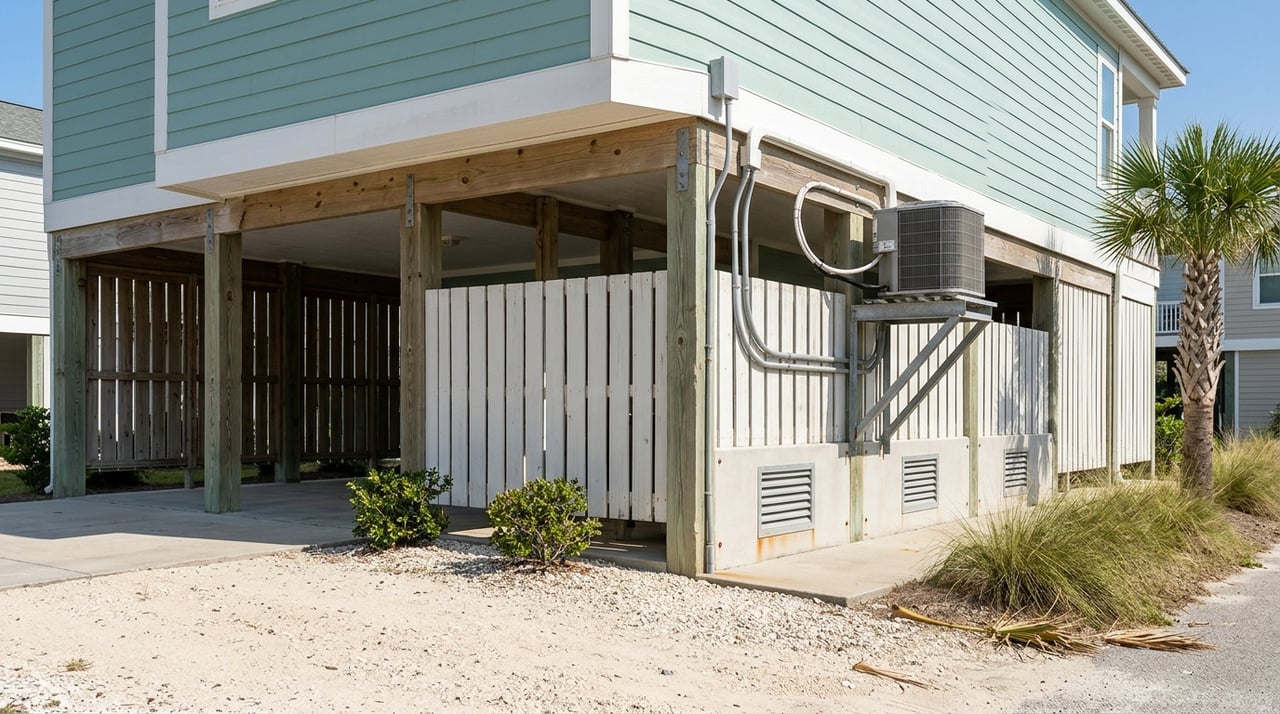
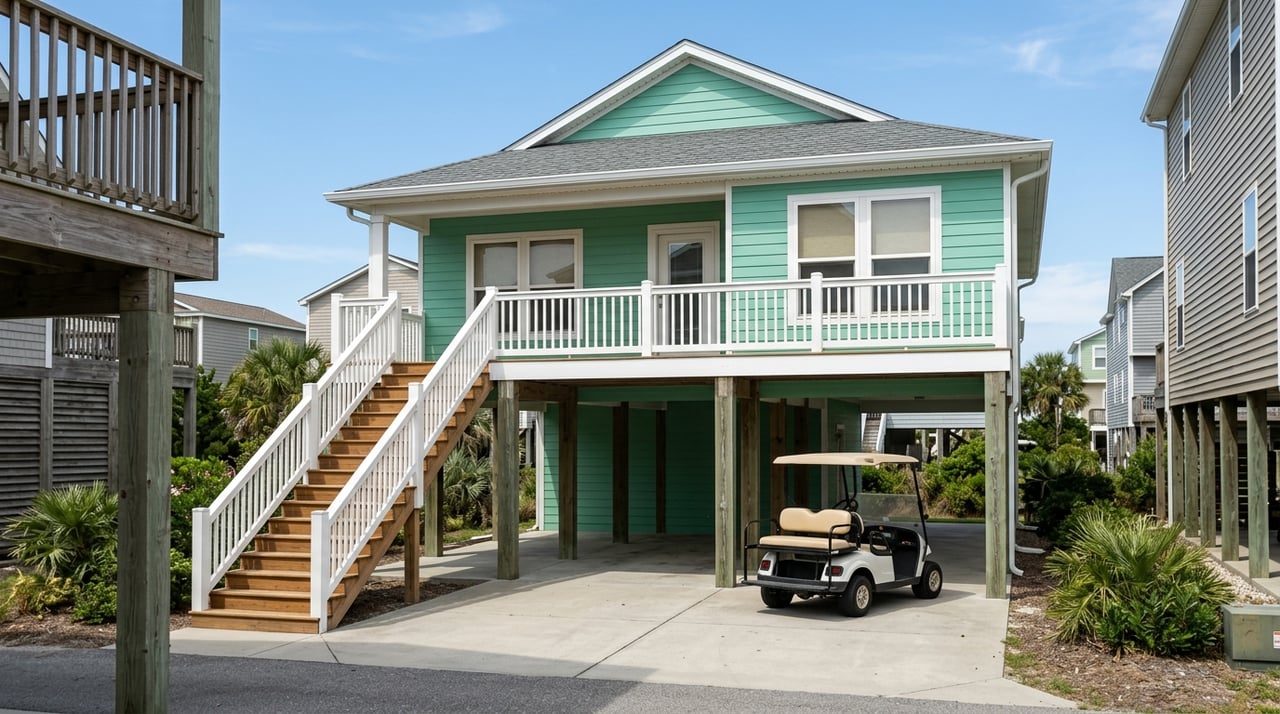
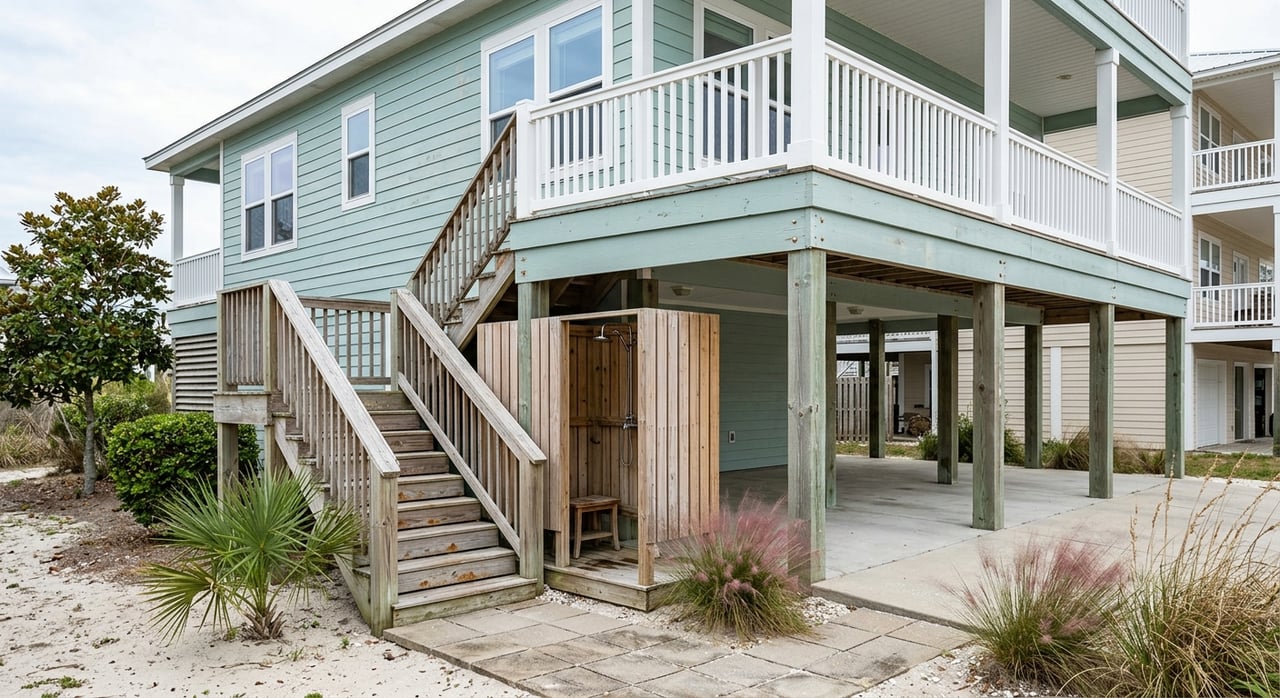
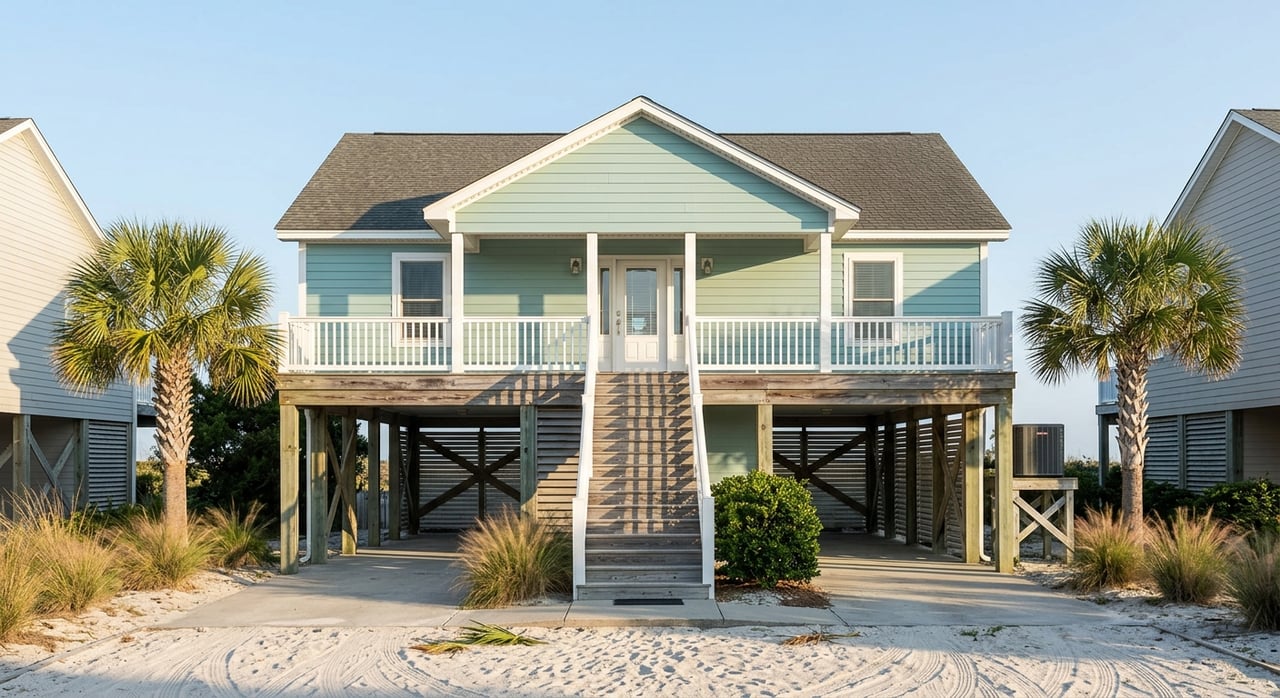
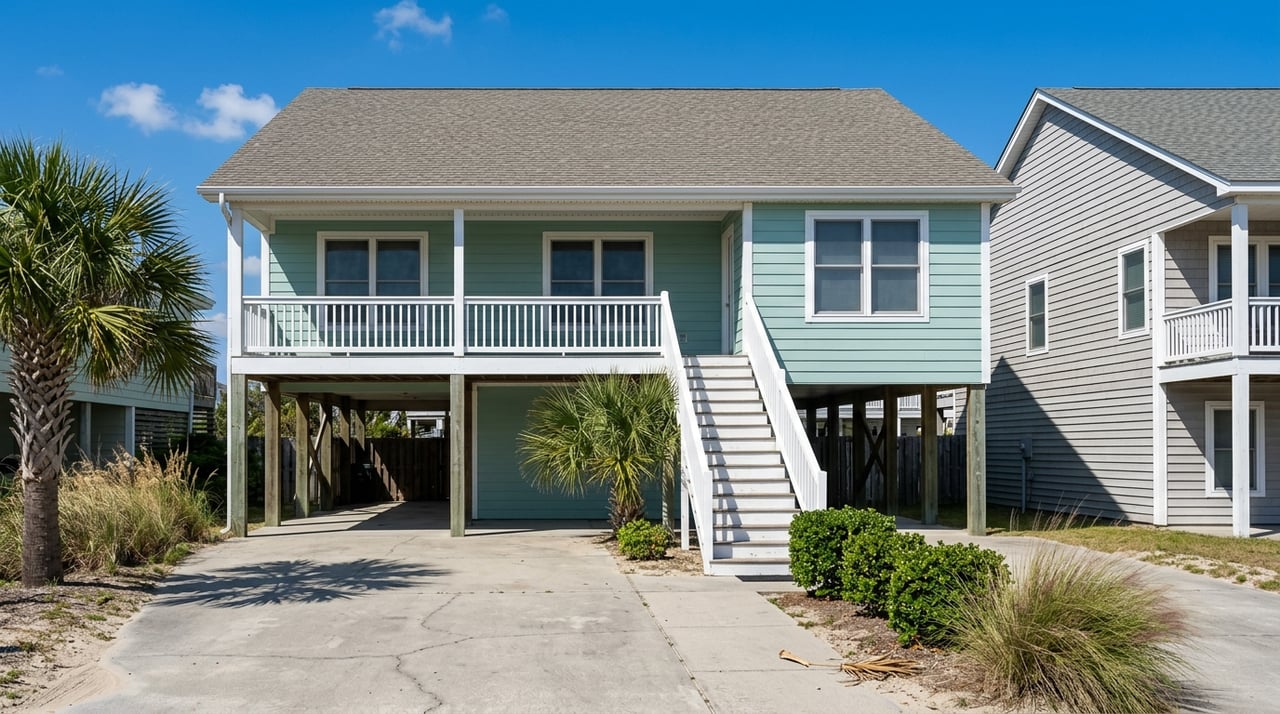
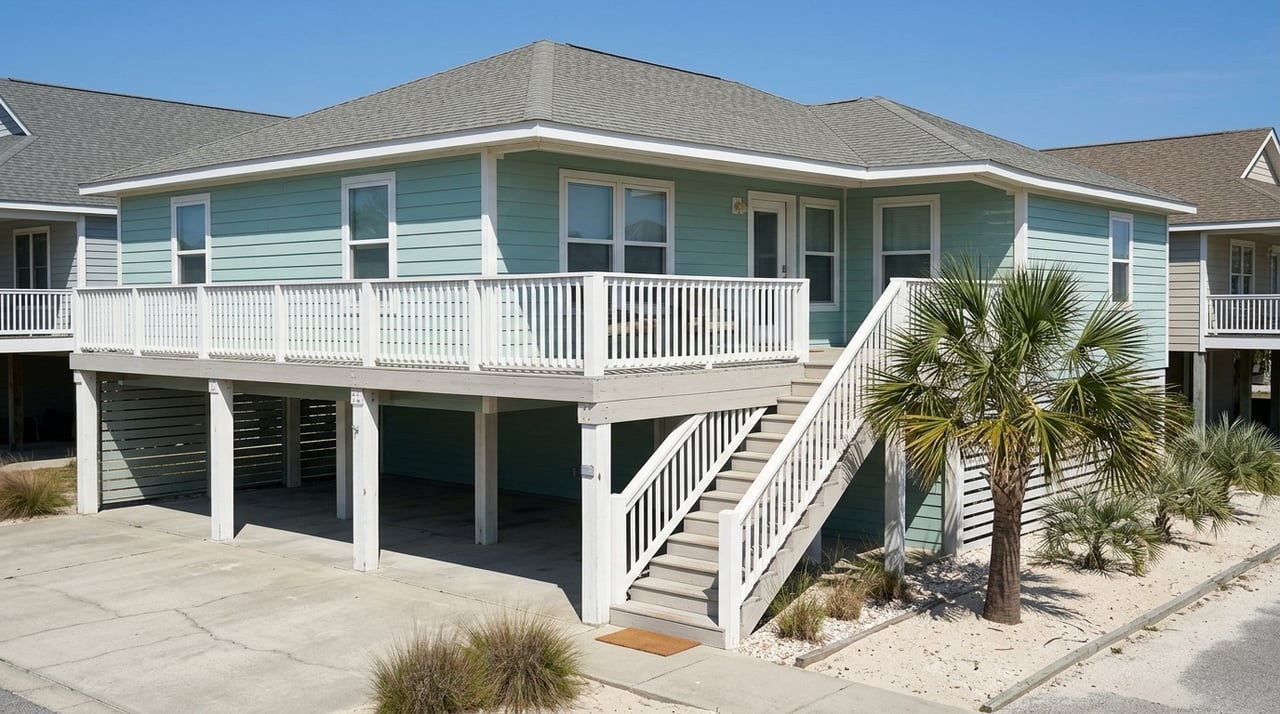
When you walk up a long staircase to a Galveston beach house, you are seeing one of the most important features of coastal construction. Elevation is not just about the look of a stilted home. It is part of how the house is built to manage flood risk.
The City of Galveston says new and substantially improved structures in special flood hazard areas must be built at least 18 inches above base flood elevation. The city also notes that lower enclosed areas below that level are limited to parking, storage, or access, and materials used below that level must be water-resistant.
For buyers, this means the height of the living area matters. A home with a stronger elevation profile may be easier to insure on favorable terms than a home that sits closer to expected floodwater levels.
An elevation certificate, often called an EC, records how high a building sits in relation to expected floodwater, including the first-floor height. According to FloodSmart’s elevation certificate guidance, insurers use this document to assess risk and it may help identify available discounts.
In Galveston, an EC is often especially important for homes in Zone A or Zone V. If there is no elevation certificate on file, FloodSmart says you can contact the local floodplain manager or hire a surveyor, engineer, or architect to prepare one.
That makes the EC one of the most useful documents to request early in the process. It can help you move from guessing about insurance costs to evaluating a property with real numbers.
Not every flood zone carries the same type of exposure. In coastal V zones, FEMA says buildings must be anchored to resist wind and water loads acting at the same time, elevated above base flood elevation, and certified by a registered engineer or architect.
FEMA also notes that breakaway walls below the structure may need their own certification if they exceed the design loading limit. For a beachfront or near-beach house in Galveston, this is one reason documentation matters so much.
A pretty exterior and a great deck view are only part of the story. You also want to know whether the home’s design and improvements were documented correctly for the conditions it faces.
One of the biggest surprises for coastal buyers is this: flood insurance and windstorm coverage are not the same thing. In Galveston, you should evaluate them as two separate insurance questions.
The Texas Department of Insurance says standard homeowners insurance does not cover flood damage. TDI also says a standard homeowners policy on the Texas coast does not cover wind and hail damage, and that the Texas Windstorm Insurance Association, or TWIA, serves as the insurer of last resort for wind and hail coverage in the coastal market.
That means a buyer may need a homeowners policy, a flood policy, and separate windstorm coverage depending on the property and insurer. When you compare beach houses, insurance structure is just as important as sale price.
TDI’s flood insurance consumer guide says the average flood policy costs about $700 per year, though actual pricing varies by flood risk, home value, and deductible. TDI also notes that most flood policies have a 30-day waiting period, which is important if you are on a tight closing timeline.
The exact number for your property could be higher or lower. The takeaway is that flood insurance should be quoted early, not after inspections are done and deadlines are close.
According to TWIA rate information, the average residential premium was about $2,480 as of June 30, 2025. TWIA says premiums are based on the amount of insurance, construction type, deductible, and optional coverages, with possible credits for items certified as built to recent windstorm codes.
TWIA also notes that rates are uniform across the 14 first-tier coastal counties. So for many Galveston buyers, the building’s construction details and coverage choices may matter more to TWIA pricing than the exact location on the island.
For Galveston buyers, flood paperwork is only half the story. Windstorm certification can also affect eligibility and cost.
TDI says the windstorm inspection program applies to Texas first-tier coastal counties, including Galveston County. TWIA’s eligibility guidelines say a property generally must be in the designated coastal area, be denied by at least one authorized private insurer, be certified as meeting applicable windstorm code requirements, and remain in insurable condition.
TWIA and TDI use Certificates of Compliance to document windstorm eligibility. TWIA says common certificate forms include WPI-8 for new and ongoing improvements, WPI-8-E for completed improvements issued by TDI, and WPI-8-C for certain completed improvements accepted during a specific past period.
TWIA says certification may be needed for work such as:
This is important because many Galveston beach houses have been updated over time. A home may look move-in ready, but if major work was completed without the right documentation, that could affect your insurance path.
TWIA also notes that some residential properties built from 1988 through June 18, 2009 may still qualify without a certificate, but they can face a 15 percent surcharge. For buyers comparing annual ownership costs, that is not a small detail.
When you tour a Galveston beach house, it helps to think beyond finishes and floorplans. The right questions can tell you whether a home is likely to fit your budget not just at closing, but year after year.
Here are smart questions to ask during showings, inspections, and due diligence:
These questions help you look at a home the way a local coastal buyer should. You are not just buying square footage. You are buying a structure, a site, and a risk profile.
The list price of a Galveston beach house is only one piece of the decision. Your total ownership cost may also include:
That is why two homes with similar asking prices can feel very different once you factor in insurance and documentation. A well-elevated house with complete paperwork may offer a smoother ownership experience than a cheaper home with missing records or compliance gaps.
Galveston beach houses have a rhythm all their own. You notice the deck breeze, the under-house parking, the pilings, and the easy pull toward water and sunset views. But behind that lifestyle is a practical side of island ownership that deserves careful attention.
That is where local knowledge matters. Understanding how flood maps, elevation standards, windstorm certificates, and insurance timing fit together can help you make a clearer, more confident decision.
If you are comparing beach houses on Galveston Island and want help sorting through the real-world details, Shani Atkinson can help you balance the island lifestyle you want with the practical questions that protect your investment.
Stay up to date on the latest real estate trends.
With deep island knowledge and a client-first mindset, Shani helps you navigate the Galveston market with confidence—delivering clarity, communication, and exceptional outcomes.